
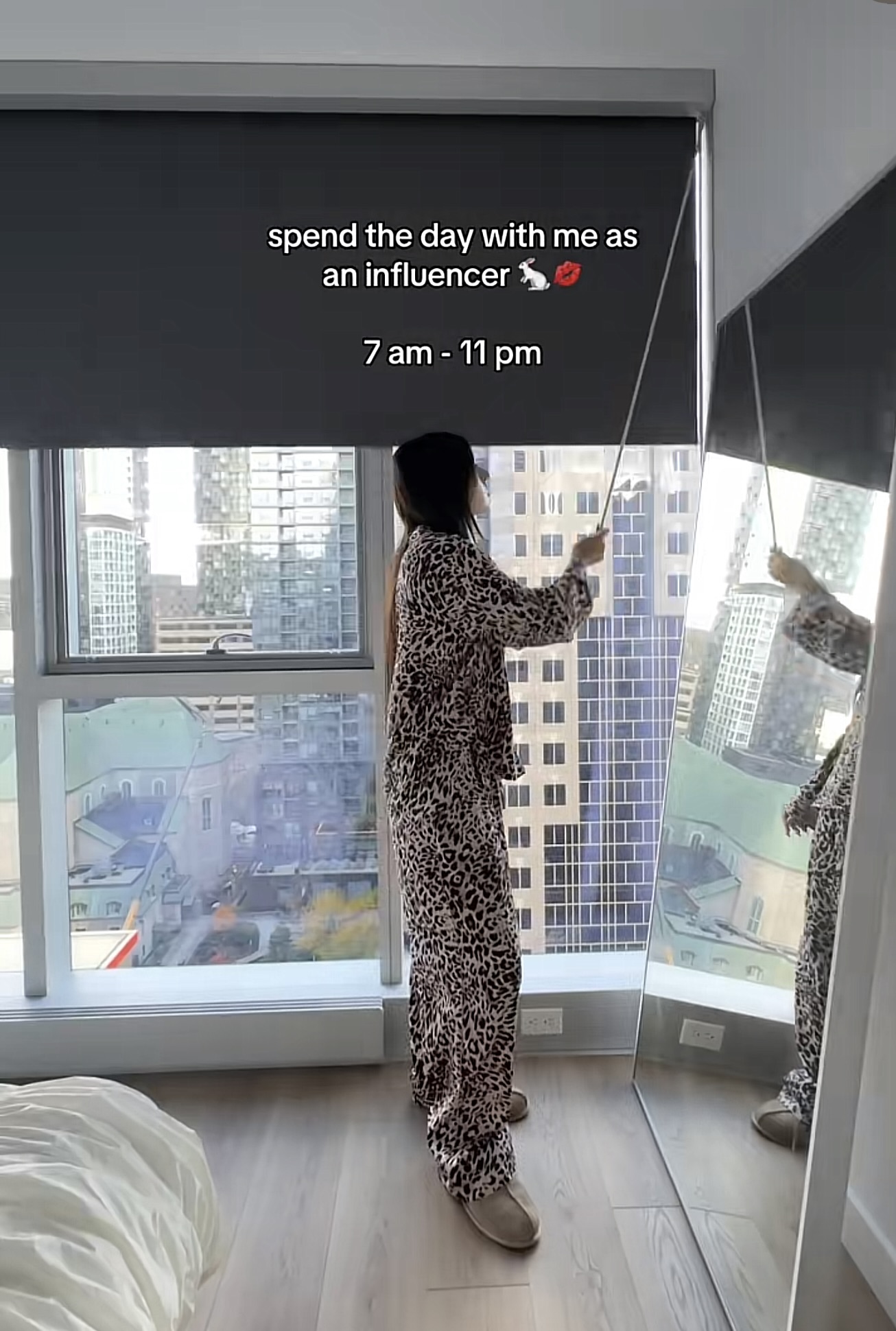
An influencer shows her daily routine as she wakes up in her NYC penthouse
How “Day in my Life” videos turned everyday routines into aesthetic performances
Rising Popularity of “Day in my Life” Videos
Over the last few years- and especially with the rising popularity of TikTok- daily routines and morning routines have become one of the most interacted with videos on social media. Some popular aspects are early mornings starting at 6am, drinking homemade matcha lattes, heated workouts that cost $30+, expensive cars to drive to work, luxury grocery shopping hauls, and perfected night routines ending with looking out of a penthouse window. “Day in my life’s” have shifted from a realistic, relatable routine to a carefully curated performance. These videos make ordinary life seem cinematic and inspire people to try to recreate their own movie in their daily lives.
These videos can give viewers a small glimpse of hope to one day have a morning that feels so calming and structured. This has not only caused competition to see who can create the more “aesthetic” routine, but also has caused unnecessary pressure on viewers to live up to this false, premeditated expectation.

An influencer taked us through her day on a Private Jet to go shopping.
The Motivation Behind these videos
The appeal to watch these videos is evident- they are inspiring, entertaining, and seem effortlessly executed. Many routines are paired with calming or energizing music, appetizing lighting, healthy food, and self-care. This creates a mood around each video, giving off a different vibe appealing to the target audience.
These videos also create a sense of community. An example is kids in college finding another student to make a “Day in My Life: College Edition” and find a sense of comfort in their routine. A young lawyer could see another lawyer’s routine and take inspiration from their daily work life. These videos can aid in feeling more accepted and even inspire people to add new healthy habits to their routine. In Jenny Hotchkiss’s “The Trap of Tiktok ‘Day in the Life,’” she discusses how she “tried to copy the admirable habits [she] saw in each daily routine.” From the videos, she picked up some good habits such as reading more, journaling, and creating new healthy recipes. Because the content she views is short and frequently watched, it becomes a reminder daily to integrate healthy practices into their routines. However, she ultimately decided that “this routine felt disingenuous” because it had been copied from someone elses content. She even argues that the vidoes “pose a direct threat to the essential individuality” of a person.
The Pressure behind the Aesthetic
The behind the scenes of these aesthetic daily videos is often overlooked, or not shown at all. The “cleanup” of each video is crucial to the popularity of the video. This means that lighting is edited, messy rooms are cropped out, boring parts of the day are not included, and everything is made to seem effortlessly strung together.
These highly distorted videos begin to represent what a day “should” look like, and discourage people who do not have a day similar to the ones they are constantly viewing on their screen. People may begin to feel like they are falling behind or are not accomplishing enough in a day to feel proud. The small, boring moments of a normal day, such as waiting for a taxi, studying for hours, or working a normal job are often not included. This creates a false narrative for people viewing the content.
This entire situation causes a new expectation; an expectation to have a perfect day without mistakes, failure, or delays. The algorithms in social media reinforce this because only the most polished, perfect days are showcased to the bigger audiences. The daily routines that show the most colorful food, hardest workouts, and the most work being done are promoted and recreated to feed into the narrative that a day should replicate that.
The result is that over time, what a good day should feel like is shifted to what a good day should look like. Goals are changed from being meaningful thresholds to aesthetically pleasing ones. Productivity becomes performative rather than a feeling.
The impact that this trend has is in the middle- it is helpful, but it is also not harmless.
Positive Impacts
On the positive side, Day in my life videos help “inspire new hobbies, recipes, self-care practices, and routines”(Ashley Johanson). However, on the negative side, this content can create psychological feelings of inferiority. It also contributes to the loss of authenticity- personal goals become a contest to see who can be more aesthetic at reaching them, and true productivity is lost in the focus on trying to have a perfectly polished day. This trend shows how social media turns living into a contest, and it how it can reshape the way we think about ourselves.
In Jenny Hotchkiss’s “The Trap of TikTok ‘Day in the Life,’” she discusses how her for you page has been flooded with short clips of young girls showing parts of their day. She even says that she “tried to copy the admirable habits [she] saw in each daily routine.” From the videos, she picked up some good habits such as reading more, journaling, and creating new healthy recipes. However, she ultimately decided that “this routine felt disingenuous” because it had been copied from someone else’s content.

A Naturopathic Doctor going through her day and showing healthy habits + tips
References:
Hotchkiss, Jenny. “The Trap of the TikTok ‘Day in the Life.’” The Trap of the TikTok “Day in the Life,” 1 Oct. 2023, bcheights.com/209048/opinions/the-trap-of-the-tiktok-day-in-the-life/.
Johanson, Ashley. “Why We Love A ‘Day in My Life.’” SWATCH, SWATCH, 26 Nov. 2024, www.swatchbyamda.com/blog/why-we-love-a-day-in-my-life.
Leave a Reply