Who’s really the victim?
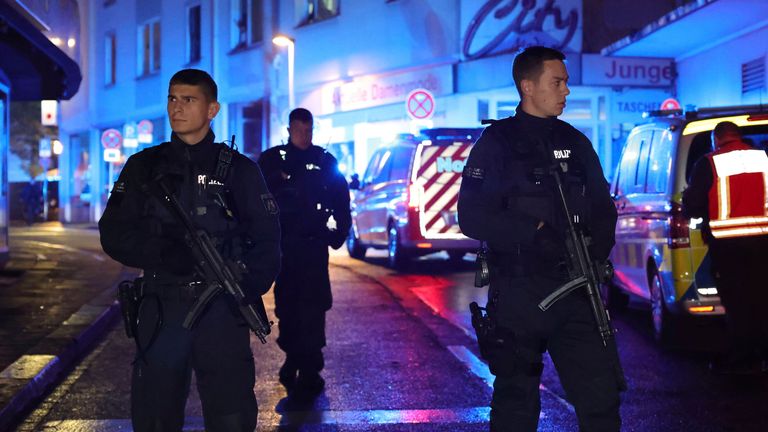
In August 2024, a stabbing took place in Solingen, Germany where 3 people tragically lost their lives and 8 other victims got injured. The attacker was 26-year-old Isaa al Hassan who was found out to be a Syrian refugee. The revelation of this personal information grew into a powerful wave of disinformation against Muslim individuals. Moreover, far right and anti-immigration groups took advantage if this issue to emphasize inaccurate narratives about public safety and the Muslim community.

Rather than doing proper research on the matter, these far-right organizations immediately began using social media as a medium to spread false claims about the correlation between crimes and immigrants in the country. By using social media platforms such as Instagram, X, Facebook and Telegram, allow these groups to reach a large target audience within hours. However, the disinformation did not stop with just statements, far right organizations then took it upon themselves to generate AI images on Muslims to create fear amongst audiences. For example: one widely shared image depicted police officers kneeling for a number of Middle Eastern men which are seen in front of them, to portray that Muslims are now trying to control and take over European countries.
Although many viewers were able to recognize the AI image as fake due to the unusual symmetry, distorted proportions and poor facial features. However, these types of AI pictures can be very dangerous as someone mindlessly scrolling and quickly viewing a picture of this sort without looking into any specific details can easily fall into the disinformation trapand believe that whatever they are viewing is in fact part of our reality.
This type of disinformation can also be very harmful as “most citizens are not very knowledgeable about politics and society, even though there are differences between countries” (Broda 2)
Consequently, if one’s main outlet of political information comes from social media, they may see these AI pictures and false statements as “facts”.

As a result of these far-right organizations actions, Germany in the months after the Solingen attack saw a rise in anti-Muslim incidents. This raises a critical question on our digital age, should social media platforms enforce stricter regulations to prevent such disinformation from circulating? Although free speech should be each individual’s right, there should also be a priority in keeping users safe from manipulated content which is designed to mislead and shift audiences’ perceptions. As AI tools become more accessible and advanced, the potential for harm increases, and in this case can affect already marginalized groups to keep a further divide from them and society.
Overall, should this be the platforms duty to keep consumers safe from this kind of disinformation, or should users be more aware on the content their consuming and research information when its being showcased to them to fact check? All we know is that this type of content has negatively affected many innocent Muslim people’s lives, so whether or not it should be someone responsibility to make sure the disinformation does not manipulate one’s mind. We should also start focusing on how we can stop these hate crimes against marginalized communities, these Muslim communities have suffered enough Islamophobia for it to go unnoticed.
Works cited:
Broda, E., and Jesper Strömbäck. “Misinformation, Disinformation, and Fake News: Lessons from an Interdisciplinary, Systematic Literature Review.” Annals of the International Communication Association, vol. 48, no. 2, 2024, pp. 139-166.
Hamed, Suhaib Kh., Mohd Juzaiddin Ab Aziz, and Mohd Ridzwan Yaakub. “Disinformation Detection about Islamic Issues on Social Media Using Deep Learning Techniques.” Malaysian Journal of Computer Science, vol. 36, no. 3, July 2023, pp. 242–270.
Leave a Reply